If you live in Oakland, Alameda, Emeryville, or anywhere close to the East Bay waterfront, you already know what the Bay air does to metal. Cars rust faster here. Hinges corrode. Outdoor furniture needs replacing more often than it should.
Your garage door is no different. In fact, it’s one of the most exposed metal systems on your entire home, and the combination of salt air, coastal fog, and daily moisture makes the East Bay one of the toughest environments for garage door components in California.
The good news is that the damage is almost entirely preventable. We’ve been serving Oakland and the East Bay since 2009, and this guide covers exactly what the local climate does to your garage door and what you can do to stop it.
Why Salt Air and Fog Are So Hard on Garage Doors
Most homeowners think about rust as something that happens slowly over years. In coastal environments like Oakland and Alameda, it happens much faster than that.
Salt particles in the air are highly corrosive to steel. They accelerate the oxidation process that causes rust, particularly on surfaces that are repeatedly exposed to moisture from morning fog and evening marine layer. This creates a near-constant cycle of moisture, salt deposit, and corrosion that affects every metal component of your garage door system.
The U.S. Department of Energy notes that environmental exposure is one of the leading causes of premature garage door component failure. In coastal climates, that timeline is significantly shortened compared to inland areas.
Here is how it affects each part of your system specifically.
 Springs: The First Component to Show Corrosion Damage
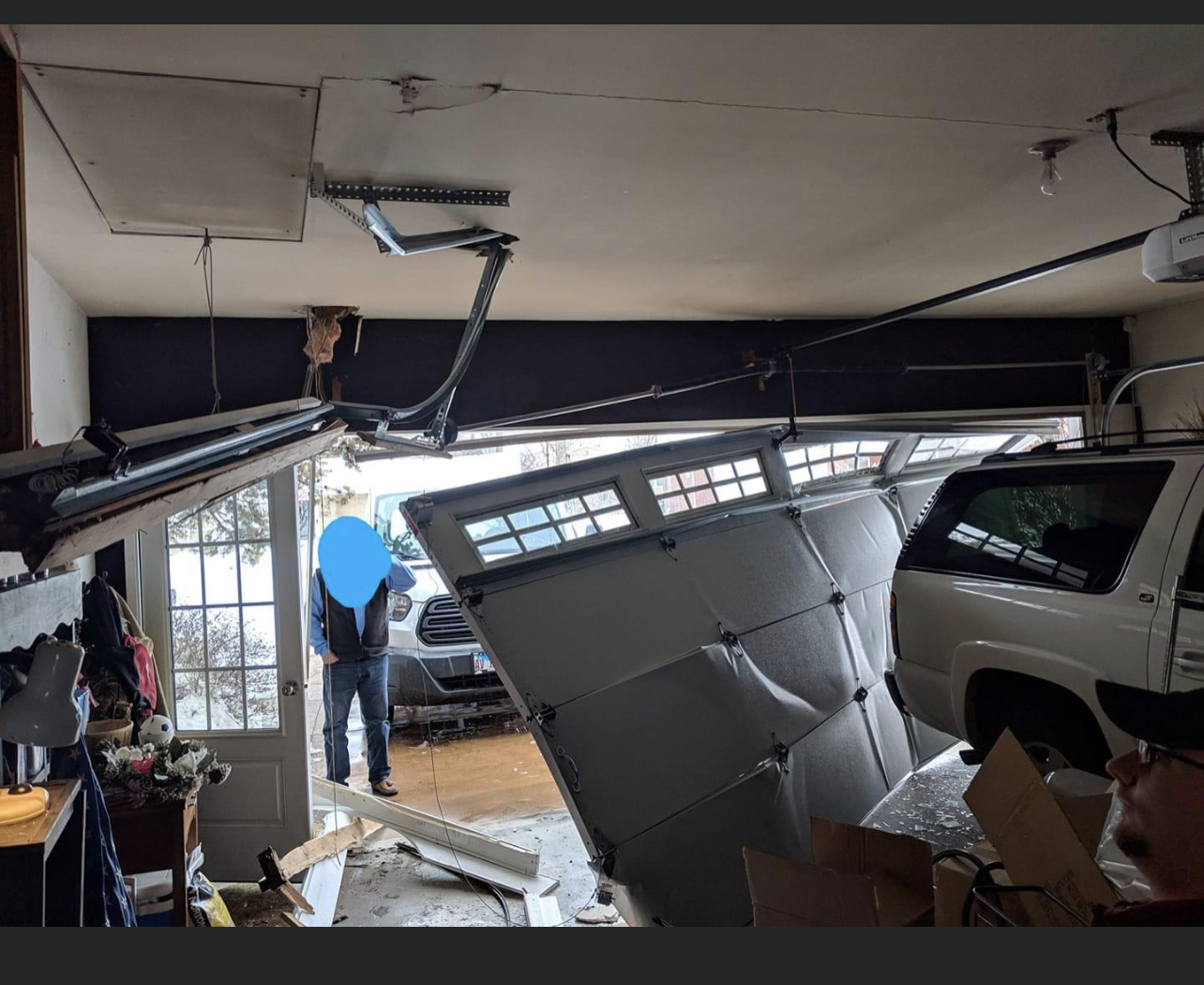
Garage door springs are made of coiled steel wire and are under constant tension. That makes them both mechanically stressed and highly vulnerable to surface corrosion.
Standard oil-tempered or galvanized springs develop rust on the outer coil surface relatively quickly in the East Bay climate. Once rust penetrates beyond the surface, it weakens the structural integrity of the spring wire. A spring that might last 10 to 12 years inland may fail in 5 to 7 years in a high-exposure coastal location like Alameda or the Oakland waterfront.
This is one of the main reasons we use powder-coated springs on every job. Powder coating creates a much more durable barrier against salt air and moisture than galvanizing alone. It is not a cosmetic choice. It is a functional one that directly extends spring life in East Bay conditions.
If your springs are standard galvanized and more than 5 years old in a coastal zip code, having them inspected annually is a smart habit. Book a spring inspection with our Oakland team.
Cables: Salt Air Frays Steel Strands Faster Than You Think
Garage door cables are made of braided steel wire, which gives them an enormous amount of surface area exposed to the air. In a salt-air environment, that surface area works against you.
The individual wire strands that make up the cable can begin to corrode at the microscopic level long before you can see it with the naked eye. By the time fraying is visible on the surface, the cable has often already lost meaningful tensile strength.
Signs to watch for in coastal homes specifically:
- A reddish or brownish discoloration on cable surfaces
- Any visible separation or unraveling of wire strands
- Stiffness in the cable where it wraps around the drum
- A door that feels uneven or slightly crooked when operating
Annual lubrication of cables with a silicone-based product helps create a moisture barrier. But once corrosion has set in, replacement is the only safe option.
Tracks and Hardware: Rust That Quietly Jams Your Door
The steel tracks that guide your door up and down are thick enough to resist corrosion for years, but the hardware connecting them to the wall and ceiling is often thinner gauge and more vulnerable.
Mounting brackets, bolts, hinges, and roller shafts are all susceptible to rust in the East Bay climate. As hardware corrodes, bolts become difficult to tighten, hinges develop play that causes the door to wobble, and rollers seize up in their tracks.
Seized or rusted rollers are one of the most common causes of a grinding or rough-sounding garage door in Oakland homes. The fix is straightforward, but ignoring it means the opener motor has to work harder, which shortens its lifespan.
Check hardware annually for any visible surface rust. Light surface rust on thick components can be cleaned and treated. Rust on thinner brackets or bolt heads usually means replacement is needed.
Weatherstripping and Bottom Seals: Moisture Entry Points
The rubber seals around your garage door are your first line of defense against moisture entering the garage. In Oakland’s climate, they take a beating from constant fog and damp air.
UV exposure during sunny periods followed by heavy moisture from the marine layer causes rubber to dry out, crack, and lose elasticity faster than in drier climates. Once the seal fails, damp air flows freely into the garage, which accelerates rust and corrosion on everything inside, including your car’s undercarriage.
Inspect the bottom seal and side weatherstripping every spring. If the rubber is cracked, brittle, or no longer making contact with the floor or frame, replace it before the next fog season.
Opener Motors: Humidity Is the Silent Killer
Your garage door opener motor sits in the garage ceiling, where it is exposed to every humidity fluctuation the East Bay delivers. Over time, moisture infiltration causes circuit board corrosion, gear housing rust, and electrical connection failures.
This is especially true in garages that do not have good ventilation or where the door is left open for extended periods during foggy mornings, allowing saturated air to settle throughout the space.
Signs your opener motor may be suffering from moisture damage:
- Erratic or intermittent operation that clears up on dry days
- Visible corrosion around the motor housing
- Clicking or humming without movement
- The door reversing or stopping for no clear mechanical reason
Modern openers from LiftMaster and Genie are built with better sealed components and improved moisture resistance compared to older units. If your opener is more than 10 years old and showing signs of moisture-related issues, an upgrade is often more cost-effective than repeated repairs.
The East Bay Garage Door Protection Plan
Based on years of servicing Oakland, Alameda, Emeryville, Berkeley, and Hayward homes, here is what we recommend for every homeowner in the coastal East Bay:
Every 6 Months
- Apply silicone-based lubricant to springs, cables, hinges, rollers, and tracks
- Wipe down all visible metal hardware with a dry cloth to remove salt deposits
- Check the bottom seal and weatherstripping for cracking or gaps
Every Year
- Professional inspection and tune-up covering all mechanical components
- Check springs for surface rust and assess remaining service life
- Inspect cables for fraying or corrosion at drum contact points
- Test auto-reverse sensors and clean sensor lenses
- Tighten all mounting hardware, brackets, and bolts
Every 5 to 7 Years
- Proactive spring replacement if using standard galvanized springs
- Cable inspection and replacement if any fraying is present
- Consider upgrading to powder-coated springs and nylon rollers for longer service life in coastal conditions
Ready to protect your garage door from East Bay weather? Contact Ace’s Garage Door Repair & Installation in Oakland for a full inspection and tune-up. We serve all of Oakland, Hayward, Alameda, Berkeley, Emeryville, and the surrounding East Bay.
Should You Choose Different Materials in a Coastal Climate?
Yes, absolutely. Material choice matters significantly in the East Bay. Here is what we recommend when replacing a door in Oakland or the coastal areas of the East Bay:
Steel with powder-coat finish: More resistant to surface corrosion than painted steel. Choose a quality finish and have it touched up if it is ever chipped.
Aluminum doors: Naturally corrosion-resistant and an excellent choice for coastal homes. Our Aluma Doors line is specifically designed with durability in mind and performs well in high-moisture environments.
Fiberglass and composite panels: Immune to rust entirely. A strong option for homes closest to the waterfront in Alameda or the Oakland estuary area.
Avoid untreated wood: Natural wood absorbs moisture and warps in the East Bay climate. If you love the wood look, faux wood steel doors deliver the same aesthetic without the maintenance burden.
We carry American Doors, C.H.I. Doors, Hörmann Doors, and Aluma Doors, all available in options suited to coastal conditions. Explore our garage door options here.
Frequently Asked Questions
Q: How much faster do garage door components wear out in coastal Oakland compared to inland areas? A: Springs and cables in high-exposure coastal areas can wear out 30 to 50% faster than the same components in dry inland climates. Regular lubrication and powder-coated components close much of that gap.
Q: Is there a specific lubricant I should use in the East Bay? A: Yes. Use a silicone-based spray lubricant rather than WD-40 or standard grease. Silicone repels moisture better and does not attract the salt and dust particles that can worsen corrosion.
Q: How do I know if my springs already have powder coating? A: Powder-coated springs have a smooth, slightly matte finish and are typically available in colors like black or gray. Standard oil-tempered springs have a shiny metallic look. If you are unsure, ask your technician at the next service visit.
Q: Do you serve all East Bay cities? A: Yes. We serve Oakland, Hayward, Castro Valley, San Leandro, Union City, Emeryville, Alameda, Orinda, Berkeley, and Fremont.
Don’t Let the Bay Air Win
The East Bay is one of the most beautiful places in California to live. But it is genuinely tough on garage door components. The homeowners who stay ahead of it with regular maintenance and the right materials spend far less on repairs over time than those who wait for something to break.
At Ace’s Garage Door Repair & Installation, we have been keeping Oakland and East Bay homes protected since 2009. We are Diamond Certified, BBB A+ rated, fully insured, and proud members of the International Door Association.
“Moe did a fine job installing two new springs on my garage door. He was pleasant and competent.” C.C., Oakland, CA
📞 Call us at (510) 706-2144 or schedule your inspection online.
Proudly serving Oakland, Hayward, Castro Valley, San Leandro, Union City, Emeryville, Alameda, Orinda, Berkeley, and Fremont.